
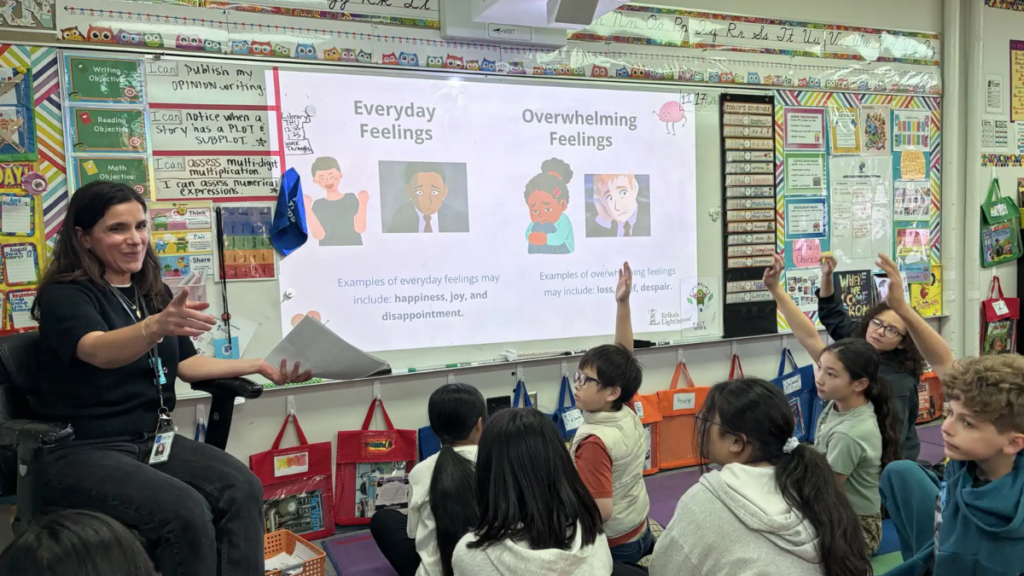
In a St. Paul elementary school, a room full of fourth and fifth graders is walking from one wall to the other. Their counselor calls out a feeling. They decide whether it is an “everyday” feeling or an “overwhelming” one, and move to the matching side of the room.
It looks like a game. It is also now the law.
What the new rule says
Minnesota’s statute says that from the 2026–27 school year, school districts and charter schools must provide mental health instruction. Lawmakers passed the requirement in 2024 as part of a wider education bill.
Before this year, the same statute only encouraged it. The wording covered grades 4 through 12 and asked that lessons line up with local health standards and fit into existing programs or the general school environment. The 2024 change turned that suggestion into an obligation.
The basics:
- Who: every district and charter school in the state
- Which students: grades 4 through 12
- What: age-appropriate lessons on mental health, including self-harm and suicide prevention
- How often: left to each district. NAMI Minnesota says most are teaching it at least once a semester or trimester.
There is one firm rule on the most sensitive material. Schools that teach about preventing suicide or self-harm have to use either the state education commissioner’s resources or other evidence-based instruction.
Inside the lesson
MPR News visited Eastern Heights Elementary in St. Paul, where counselor Julia Mullan was leading the feelings exercise. She has been an elementary counselor for more than a decade and was already teaching this material before the state required it.
She told the station she wishes the mandate had come much earlier. Counselors, she said, are there to help children succeed in class, socially and in their futures, and “mental health is the foundation of that.”
Her point about fairness is the heart of the law. Many schools have no mental health professional on staff. A statewide requirement means a child’s access to this basic knowledge no longer depends on which building they attend.
The lesson came from Erika’s Lighthouse, an organization that offers a free elementary curriculum. It teaches children to name their feelings and work out who they can talk to when emotions get big.
Why lawmakers acted
The push followed years of worrying survey results. The state education department reported a significant decline in student mental health between 2016 and 2022. Students described burnout, anxiety, depression and worry.
The 2022 Minnesota Student Survey was the low point. Nearly a third of students that year reported long-term mental health struggles, findings officials called a crisis.
The newest numbers are better. State health officials say the 2025 survey shows a reversal of a decades-long decline, with improvement since 2022 on measures tied to anxiety, depression and suicidal thoughts. The health commissioner cautioned that students are still struggling. A majority of students in that survey still said they had recently felt anxious and on edge.
The pandemic and online learning are widely cited as causes of the earlier drop. MPR also reported that professionals have more recently pointed to Operation Metro Surge as affecting students’ mental health.
Help for schools that have never done this
The education department worked with NAMI Minnesota, the state chapter of the National Alliance on Mental Illness, to build guidance and lessons.
Renée Labat, NAMI Minnesota’s youth program coordinator, told MPR the mandate is opening doors outside the Twin Cities. Schools in greater Minnesota are responding more often and following through more.
For Labat it is personal. She said that if a class like this had existed when she was in high school, she might have asked for help sooner. She had caring adults around her and simply did not know it was acceptable to ask.
NAMI Minnesota’s classes for middle and high schoolers cover:
- how to help a friend get support
- who to talk to about a mental health concern
- resources such as 988, the national suicide and crisis line
What a teacher noticed
Labat gave one of those presentations last month to middle schoolers at Discovery Charter School in Inver Grove Heights. Teacher Amy Sullivan watched from the back.
Sullivan told MPR she sees many students who are afraid to speak up when they feel very sad. She has also noticed terms like ADHD and OCD being thrown around as jokes. A lesson like this, she said, shows children that it is fine to tell someone, fine to have these problems, and fine to take medication.
What the kids think
Back at Eastern Heights, most students MPR spoke to had already heard the phrase “mental health” and wanted to know more.
One student offered his own definition: it is separate from physical health and is about where you are emotionally.
A fifth grader said he liked learning practical habits, such as staying off screens before bed. He also had a thought about the adults in his life. People who learn this in grade school will carry it through middle and high school, he reasoned, and children might end up helping older relatives understand it too.
The bottom line
The requirement does not put a therapist in every school, and it does not set a statewide curriculum. What it does is set a floor. Every Minnesota student from fourth grade up should now get at least some instruction on what mental health is, what warning signs look like and where to turn.

Chris F. Leblanc is a writer and editor covering Minnesota weather, US laws, and school news. He tracks forecasts, new rules, and education updates, and reviews every article before publishing to keep the reporting clear, accurate, and easy to follow.