
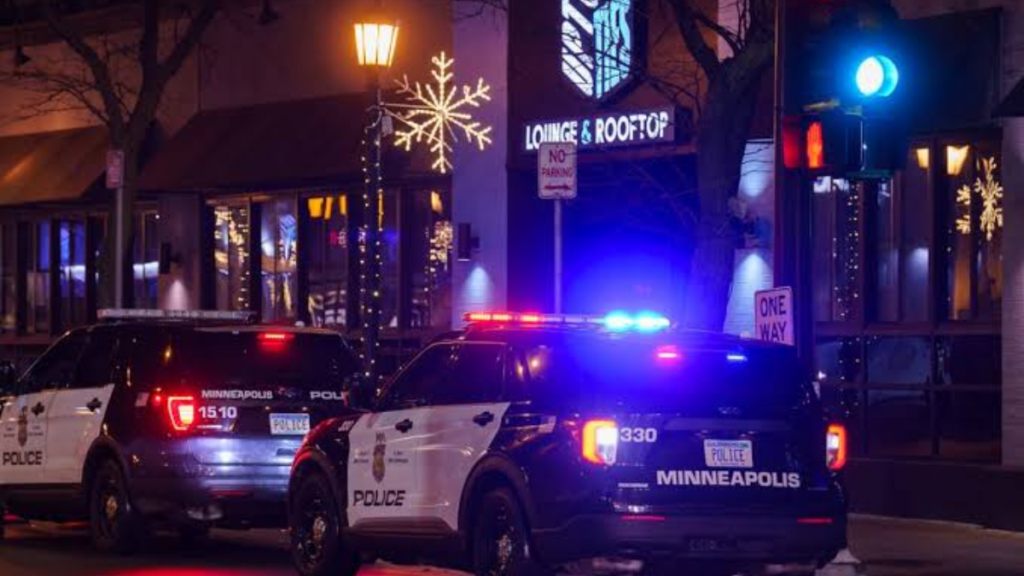
Minnesota law enforcement has launched a wide, coordinated push against gang violence. A veteran Twin Cities journalist is now warning that the state has been down this road before, and that it ended badly.
The warning comes in a commentary published Monday by the Minnesota Reformer. Police leaders, for their part, say the new approach is built differently. Here is what each side is saying, and what the record shows.
What was announced
On Oct. 19, leaders of more than 40 local, state and federal agencies announced a collaboration aimed at gun violence among groups of Somali youth they say are tied to gangs. The news conference was held in Blaine, at the state’s Emergency Operations Center.
The main points:
- A total of 46 agencies signed on to a shared framework under Minnesota’s Crime Gun Intelligence Center.
- That center is led by the state Bureau of Criminal Apprehension, the FBI and the ATF.
- Its meetings, held every two weeks until now, will become weekly.
- Each case is assigned to one of the participating agencies.
The BCA stressed that it was not creating a new task force, and described the plan as a coordinated response built on sharing information and resources.
Why police say it is needed
Officials have linked recent non-fatal gunfire in Eden Prairie, Edina and Bloomington to Somali American gangs. In one Bloomington incident on Oct. 6, more than 100 rounds were fired.
Investigators say the newer groups are more mobile and more loosely organized than gangs of the past, so cases cross city lines and involve several departments at once.
Ramsey County Sheriff Bob Fletcher has put numbers on it. He estimates about a dozen Somali gangs with roughly 300 young members in the metro, out of 1,000 to 2,000 gang members overall.
BCA Superintendent Drew Evans drew a line between those groups and the wider population. “Somali American gang and group violence is a problem, and not the Somali community,” he said.
The critic’s case
The commentary was written by Randy Furst. His argument is that the announcement left basic questions about oversight unanswered, and that Minnesota’s own history shows why those questions matter.
His main points:
- Who was missing. No Somali American officer or official spoke at the news conference, he writes, even though Somali American officers were meeting with community members around the same time.
- Civil rights safeguards. He says officials gave no explanation of how they would prevent profiling or other abuses.
- Legal oversight. Evans said a lawyer from the attorney general’s office would act as an adviser. Furst argues an adviser is not enough and wants an attorney with real authority to review cases.
- Prevention. He says the announcement focused on enforcement and said little about mentorship, family support or alternatives for young people.
- Trust in federal partners. He argues that federal authorities now joining this effort have not cooperated with state investigations into the killings of Renee Good and Alex Pretti, and that young Somali Americans may see a double standard.
- The political climate. He writes that rhetoric aimed at Somali Americans by President Donald Trump and other politicians undermines trust in the motives behind the crackdown. That is his characterisation.
Furst also notes that Fletcher stood behind Evans at the announcement. Fletcher’s office was the fiscal agent for the old Strike Force. Furst writes that Fletcher was never implicated in wrongdoing and has said he had no involvement, but lost his 2010 re-election bid amid criticism of his oversight.
What happened with the Metro Gang Strike Force
The history Furst points to is well documented.
The Strike Force was a stand-alone unit made up of officers from agencies across the Twin Cities. It ran for 11 years.
- In February 2009, the Office of the Legislative Auditor was asked to look into financial concerns at the unit.
- The auditor reported more than $18,000 in cash unaccounted for and 13 cars missing.
- A state review panel later described officers shredding documents at the unit’s offices on the night the audit came out.
- That panel’s August 2009 report cited substantial evidence of misconduct.
- The state shut the unit down for good in July 2009.
The money followed. The insurance trust representing the Strike Force agreed to a $3 million settlement in 2010, and about $840,000 of it went to 96 victims in 2012. Individual awards ranged from $300 to $75,000, decided by a court-appointed special master.
Not everything critics alleged led to charges. A special criminal inquiry led by Hennepin County Attorney Mike Freeman said two months of work by six investigators turned up no criminal wrongdoing it could prosecute.
What supporters say is different this time
The structure is the key difference, and Furst acknowledges it. The Strike Force was a single unit with its own officers. He describes the new effort as coordinated but decentralised.
Officials have pointed to other distinctions:
- No new stand-alone unit has been formed.
- Cases stay with individual agencies, each answerable to its own leadership.
- Evans has said the BCA’s gang database is governed by specific criteria set through the state’s Violent Crime Coordinating Council.
- A lawyer from the attorney general’s office is advising the effort.
Voices from the Somali community
Community reaction has been mixed, and it has not been limited to criticism of police.
The Somali American Police Association hosted a public town hall in Minneapolis on youth violence, where Somali American officers urged families to step in early. One Minneapolis officer who spoke lost his older brother to street violence seven years ago.
At a separate community meeting on Nov. 19, some attendees said the wider Somali population was being singled out unfairly. Activist Abdirizak Bihi told KSTP that “we cannot arrest our way” out of youth crime.
Where it stands
The disagreement is not really about whether the shootings are a problem. Both sides say they are. It is about how to respond.
Supporters see a practical fix for cases that cross city lines, built on an existing intelligence center and not on a new unit. Critics want written safeguards, stronger legal oversight and more investment in prevention before the effort grows.
The effort is overseen by the BCA, part of the state Department of Public Safety. Furst’s closing call is for the governor, the attorney general, the Legislature and the news media to keep watching.

Ethel L. Marini is a writer and editor covering Minneapolis and the wider Minnesota area. She reports on local news and crime stories, and reviews every article before publishing to keep the reporting clear, accurate, and easy for readers to follow.